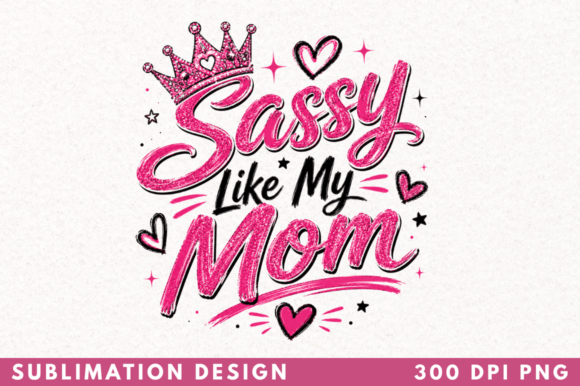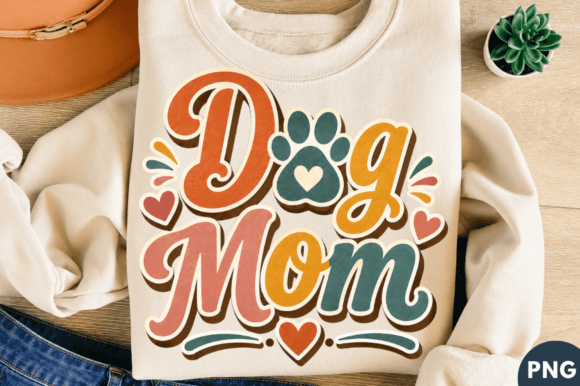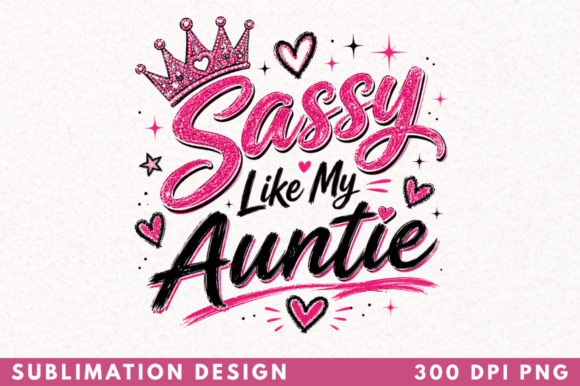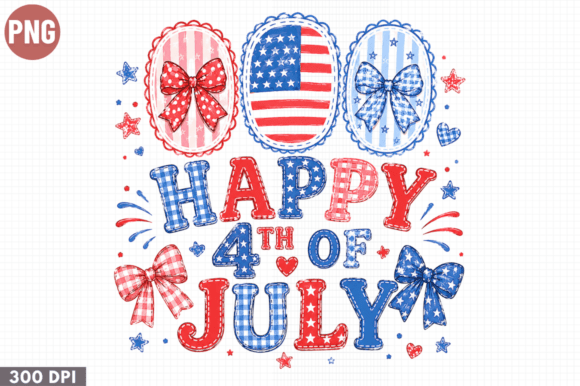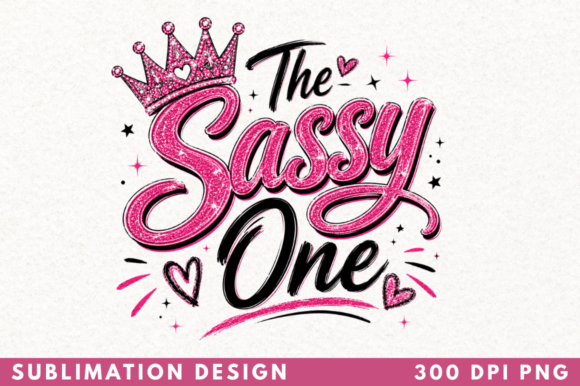
Unlocking the Potential of The Sassy One T-shirt PNG Design for Professional Results
There is a distinct satisfaction in holding a finished product that you created from scratch, whether it is a custom mug for a friend or a batch of apparel for your small business. The Sassy One T-shirt PNG Design offers a fantastic starting point for this creative journey, providing a trendy and professional graphic ready to be applied to various surfaces. However, possessing a high-quality digital file is only half the battle. Many creators, from hobbyists to seasoned entrepreneurs, often stumble not because of the design itself, but due to overlooked details in preparation, software settings, and material selection. Understanding these nuances is the difference between a vibrant, lasting print and a disappointing result that wastes both time and resources.
At its core, this digital download is a high-resolution image with a transparent background, specifically engineered for sublimation printing, direct-to-garment (DTG) application, and other craft projects. Its versatility allows it to shine on tote bags, pillows, phone cases, and wall art just as well as it does on apparel. Yet, a common misunderstanding arises when users assume that "ready to print" means "ready to print without any setup." While the file requires no editing to remove backgrounds or fix resolution issues, it still demands respect regarding color profiles and substrate compatibility. Ignoring these factors can lead to muted colors or poor adhesion, undermining the professional touch you aim to achieve.
Avoiding the Substrate Trap
One of the most frequent errors occurs when creators attempt to use sublimation designs on incompatible materials. Sublimation ink works by turning into a gas under heat and bonding with polymer fibers. If you try to sublimate The Sassy One T-shirt PNG Design onto a 100% cotton shirt without a special coating or transfer paper, the ink will simply wash away. This mistake often leads to frustration and the false conclusion that the digital file was of low quality. To avoid this, always verify the polyester content of your apparel or ensure your hard goods, like mugs and tumblers, have a dedicated sublimation coating.
For those working with cotton blends or natural fibers, the solution lies in choosing the right transfer method rather than forcing sublimation. Using a laser transfer paper or a specific DTG pretreatment process can yield excellent results with this PNG. The key is to match the technique to the material. A practical approach is to keep a reference chart of your inventory noting which items are sublimation-ready and which require alternative methods. This simple organizational step prevents costly trial-and-error runs and ensures every item you produce meets customer expectations.
Software Settings and Color Accuracy
Another area where even experienced designers can trip up is in the handling of color profiles within their software. You might download the file and open it in Canva, Photoshop, or Silhouette Studio, only to find the colors look slightly different on your screen compared to the final print. This is rarely a fault of the file itself but rather a discrepancy between RGB (screen) and CMYK (print) color spaces, or simply monitor calibration issues. When working with The Sassy One T-shirt PNG Design, it is crucial to perform a test print on standard paper before committing to expensive sublimation paper or blank products.
Furthermore, when importing the PNG into cutting software like Cricut Design Space or Silhouette Studio for sticker creation or heat transfer vinyl layering, ensure you are not inadvertently adding a white background box. Although the file comes with a transparent background, some programs may default to placing a white canvas behind the image upon import. Always zoom in closely to the edges of your design in the software workspace. If you see a white halo or box, remove it before printing. This attention to detail ensures that your stickers and decals have clean, professional edges rather than looking like amateur cutouts.
Scaling and Resolution Misconceptions
While this design is high-resolution, stretching it beyond its intended limits is a recipe for pixelation. Some users mistakenly believe that vector-like scaling applies to all PNG files. If you enlarge The Sassy One T-shirt PNG Design to cover an entire blanket or a large wall mural, you risk losing sharpness. Before starting a large-format project, check the pixel dimensions of the file against your desired print size at 300 DPI. If the math doesn't add up, scale the design down to a pocket print or a chest logo instead of forcing a full-back print that looks grainy.
Conversely, shrinking the design too much for tiny items like keychains can cause fine lines to disappear during the printing process. Ink has physical limitations; extremely thin lines may not transfer cleanly onto textured surfaces. A better approach is to preview your design at 100% scale on your monitor. If details look fuzzy or indistinct at the size you intend to print, adjust the dimensions or choose a different product where the design can breathe.
Maximizing Efficiency in Production
For small business owners and print-on-demand creators, efficiency is paramount. A common inefficiency involves disorganized file management. Since this is an instant digital download, it is easy to lose the file amidst hundreds of other assets. Create a dedicated folder structure on your computer or cloud storage specifically for licensed designs. Include a text file within that folder noting the license terms, purchase date, and source. This habit saves hours of searching later when you need to reprint an order or verify usage rights for a new product line.
Additionally, consider the placement of the design on the garment or object. Centering is obvious, but have you considered how the design interacts with seams, pockets, or handles? For example, placing a large graphic too low on a tote bag might cause it to distort when the bag is filled. Placing a design too close to the collar of a t-shirt can make it feel cramped. Take a moment to mock up the design physically or digitally on a template of the specific blank you are using. This pre-production check helps you visualize the final product and make necessary adjustments before heat pressing or printing.
- Check Material Composition: Ensure substrates have the necessary polymer content or coatings for sublimation.
- Verify Color Profiles: Calibrate monitors and run test prints to anticipate color shifts.
- Inspect Transparency: Zoom in within your software to confirm no unwanted white backgrounds were added.
- Respect Resolution Limits: Calculate DPI requirements before scaling for large or very small items.
- Organize Assets: Maintain clear records of digital downloads and licensing terms.
Ultimately, The Sassy One T-shirt PNG Design is a powerful tool in your creative arsenal, capable of elevating your product line with its sassy aesthetic and professional quality. By paying attention to material compatibility, software settings, and production workflows, you transform a simple digital file into a tangible asset that drives satisfaction and sales. The goal is not just to print a design, but to create a product that stands up to scrutiny and brings joy to the end user. With these precautions in mind, you are well-equipped to bring your creative ideas to life with confidence and precision.